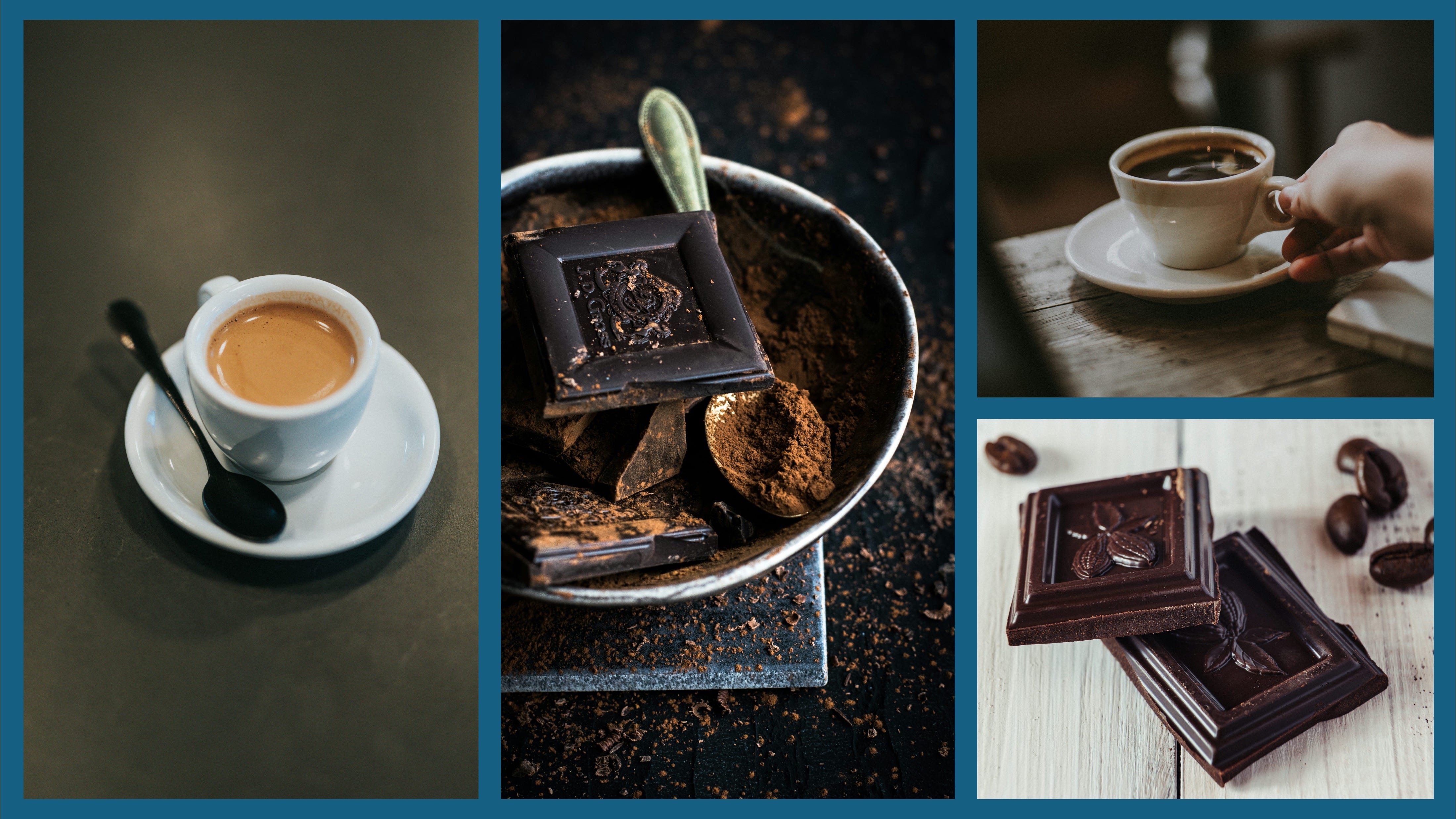
What does your love or hate for bitterness really say about you? I’ve always liked dark chocolate and coffee — bold, unsweet, but not too extreme. I stop around 70%. My dad? He’s all about that 85-90% cacao. My sister? She downs her espresso so short, like it’s a shot of silk.
These flavor differences in what we enjoy may seem like personal preferences, shaped by habits and taste memory. But what if they also reflect how our biology tunes our sensory world?
Today, we’re exploring the science of supertasting — and how your genes, brain, and tongue might explain why you love or hate certain foods.
What Is a Supertaster? A Quick Explanation
In the 1930s, scientists discovered that a compound called PROP (6-n-propylthiouracil) tasted extremely bitter to some people, and barely noticeable to others. This variation helped identify what we now call “supertasters” — people with unusually intense taste perception.
The difference is linked to a gene called TAS2R38, which codes for a bitter taste receptor. Depending on your genotype:
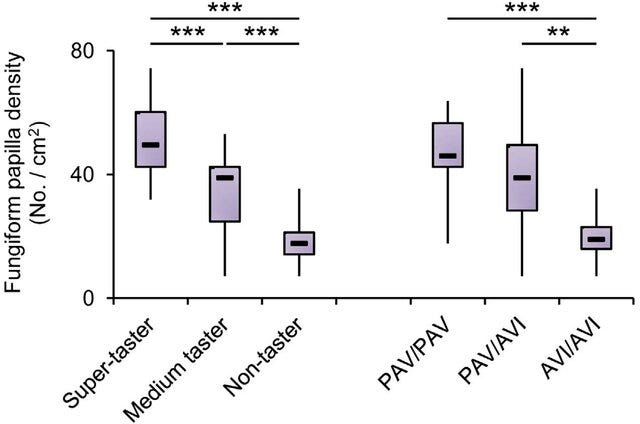
Supertasters (25–35%) perceive PROP as intensely bitter. They often carry PAV/PAV version of the gene and have high density of taste buds (fungiform papillae) on their tongue.
Medium tasters (about 50%) sense bitterness moderately and tolerate it.
Non-tasters (25%) often carry the AVI/AVI genotype and have fewer papillae, and barely detect bitterness.
Recent studies using ElectroTastegram show that supertasters respond to PROP not only more strongly but more quickly, with greate and faster cell depolarization.
📊 Sollai et al. (2017) showed a clear correlation between the number of taste buds, PROP sensitivity, and genetic variations in TAS2R38.
This chart from Sollai et al. (2017) shows a clear link between the number of these fungiform papillae and both PROP tasting status and TAS2R38 gene variants.
Do Supertasters Taste Everything More Intensely?
Yes, and it goes far beyond bitterness. Being a supertaster has now been linked to a broader test sensitivity phenotype, affecting multiple aspects of flavor perception:
Sweetness: Tastes more intense, sometimes unpleasant.
Saltiness: Slightly stronger; often used to mask bitterness.
Sour and Umami: Rated more intensely, though less researched.
Fat and texture: Rich, creamy, or fatty foods may feel heavier or overwhelming.
Trigeminal sensations: Supertasters feel spice, heat, carbonation, and tingling more strongly due to heightened trigeminal nerve sensitivity.
Food aroma (olfaction): Some report stronger smells when chewing — especially retronasally.
These heightened perceptions come from both genetic factors and a greater number of fungiform papillae, which contain taste buds and sensory nerve endings.
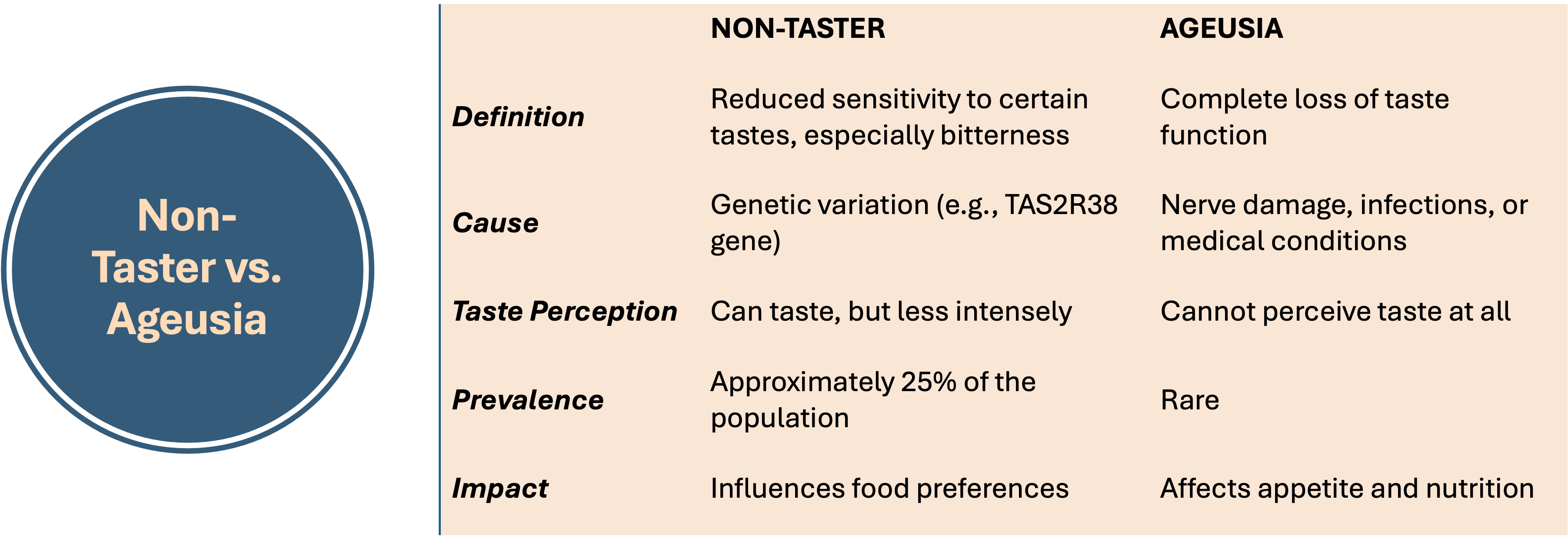
📌 Note: Being a non-taster ≠ having ageusia (complete loss of taste). Non-tasters still detect flavor — just less intensely, especially bitterness.
Brain Imaging Studies: The Brain's Role in Taste
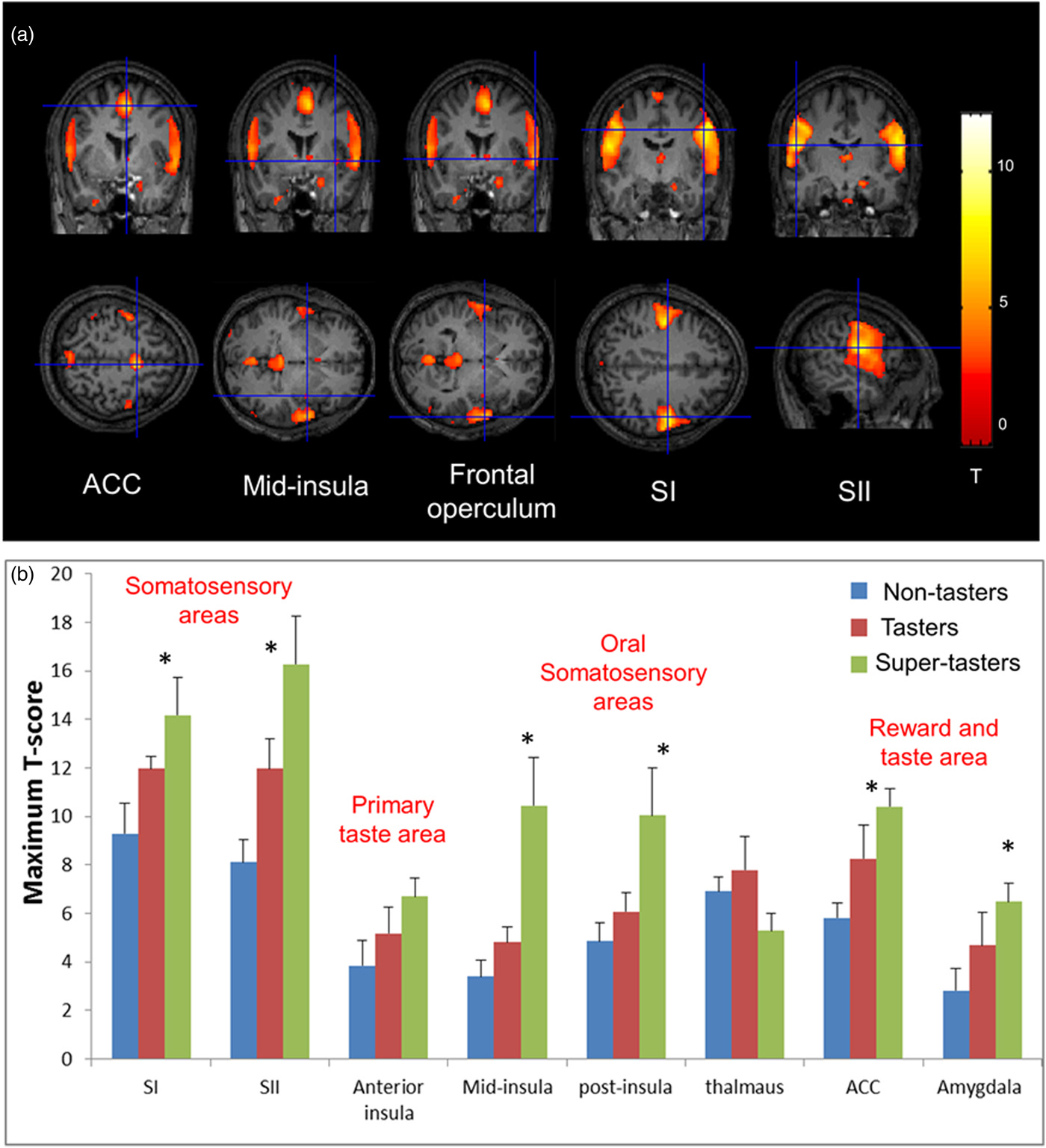
It’s not just your tongue — it’s also your brain. Functional MRI (fMRI) research shows that supertasters have stronger activation in key brain regions when exposed to intense flavors:
Insula: The primary taste cortex, also involved in olfaction perception
Somatosensory cortex: Touch and texture
Orbitofrontal cortex (OFC): Flavor integration and reward
Anterior cingulate (ACC): Attention and emotional response
These enhanced neural responses also appear in thermal tasters — people who perceive “phantom” tastes (like sweet or sour) from temperature changes on their tongue alone, without any food involved.
This means your taste phenotype affects how your brain processes flavor — which has big implications for how you eat, react to food, and even feel about it emotionally.
When tasting fatty foods, PROP supertasters show stronger brain activation - data from Eldeghaidy et al., 2011 and figure from Francis & Eldeghaidy 2014
Why It Matters: How Supertasting Affects Food Choices and Health
🍫 Enjoy strong flavors, bitter drinks, and bold spices
🍔 Prefer rich and high-fat foods
⚖️ May eat more overall to reach the same level of taste satisfaction
These patterns can shape your long-term dietary habits and health outcomes. Studies suggest that supertasters may have:
Slightly lower BMI on average (especially among women)
Better cardiovascular markers due to lower fat/sugar intake
But also lower vegetable consumption, which may reduce fiber and antioxidant intake
For chefs, sommeliers, baristas, or food lovers, knowing your taste sensitivity profile can improve how you describe, prepare, or enjoy flavors. Supertasters may gravitate toward subtle, balanced dishes, while non-tasters often crave bold, complex profiles — think espresso, IPA beer, or high-acid wines.
Are You a Supertaster? How to Find Out
You can explore your taste type with a few simple tools:
✅ PROP Test Strip: Taste a PROP-impregnated paper strip (available online). If it’s extremely bitter, you’re probably a supertaster. ✅ Blue Tongue Test: Apply blue food coloring to your tongue. The pink dots (fungiform papillae) stand out. Count them in a 6mm circle — more dots = more taste buds. ✅ Your own taste reactions: Love black coffee, spicy food, raw greens? You may be a non-taster. Hate bitterness, rich textures, or strong spice? Supertaster’s likely.
Takeaway » Your Taste, Your Biology
We tend to think of taste as opinion: "I like this," or "I don’t like that." But as science shows, taste is also biology — shaped by your genes, your tongue, and your brain.
You’re not just picky. You’re wired differently.
Whether you savor espresso or avoid bitter greens, your food preferences reflect how your body processes flavor. And understanding this can help you make more informed food choices, embrace your sensory strengths, and connect with others whose palates are wired differently.
If you enjoyed this post, feel free to reach out or share it with a friend. And if you’ve ever tried the blue tongue test or a PROP strip, I'd love to hear from you!
I'm Anne-Lise Saive —a passionate neuroscientist and olfaction expert by day, and an endlessly curious food, perfume, and tech explorer by night. I could spend hours reading about food science and in my kitchen, cooking the perfect pasta dish with a glass of red wine! 🍝🍷
My mission? To take you along on my exciting journey through the worlds of taste, aroma, and science. Together, we'll explore groundbreaking research, dive into technological advancements, and engage in stimulating conversations with experts at cutting-edge scientific conferences and industry workshops. Expect captivating stories from the latest research discoveries and fresh insights from innovative projects I’m leading.
Flavors of Science is your curated gateway into the hidden universe of food, fragrance, and technology. Join me on this flavorful journey!
The reference for the correlation between the number of taste buds, PROP sensitivity, and genetic variations in TAS2R38 is wrong! The paper that shows that is 'Sollai et al 2017'.



my adult son is also I thought from growing up with me working as a chef in restaurants, interesting piece
Hi,
The reference for the correlation between the number of taste buds, PROP sensitivity, and genetic variations in TAS2R38 is wrong! The paper that shows that is 'Sollai et al 2017'.